
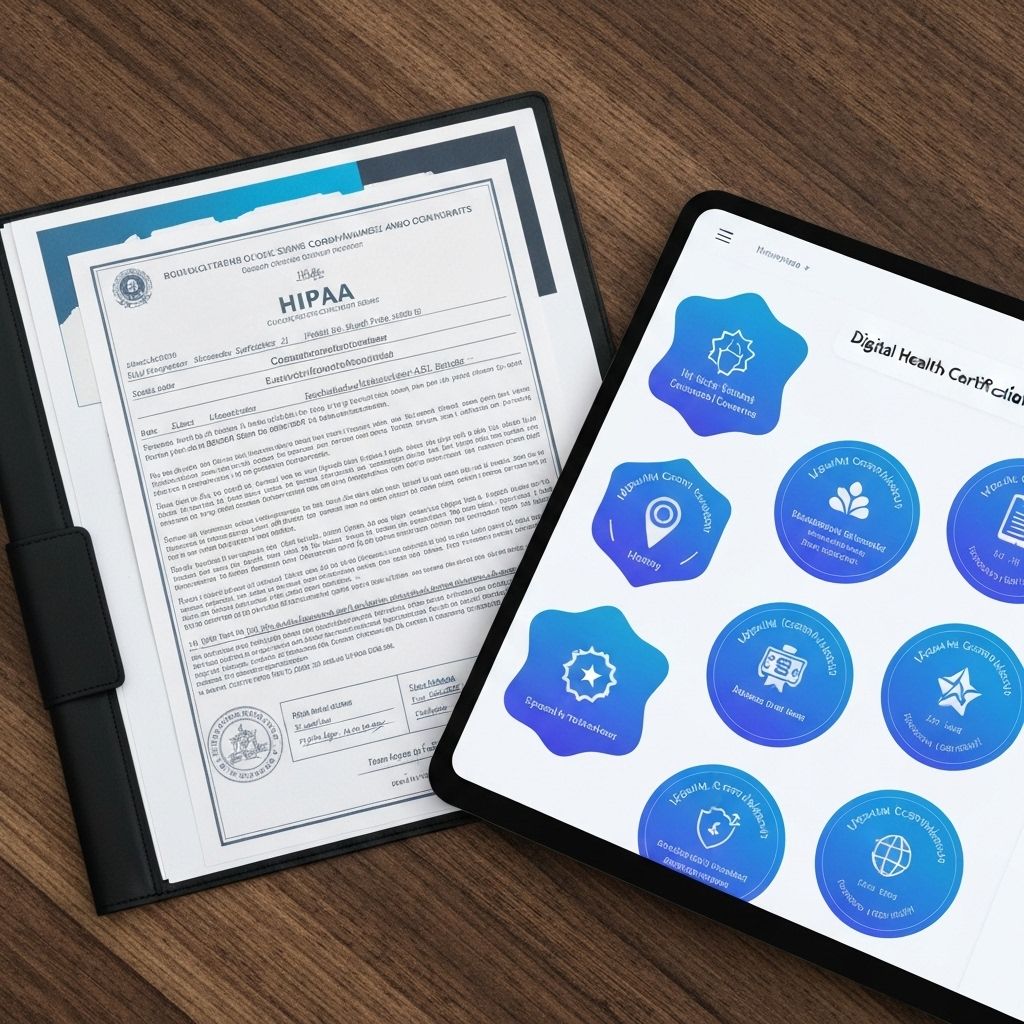
Regulatory compliance is non-negotiable for digital health platforms in biopharma. Whether you're collecting patient-reported outcomes, supporting clinical trials, or generating real-world evidence, you must navigate a complex landscape of regulations designed to protect patient privacy, ensure data integrity, and maintain product quality.
The Regulatory Landscape
Digital health platforms supporting rare disease therapies must comply with multiple regulatory frameworks, each with distinct requirements:
- HIPAA (Health Insurance Portability and Accountability Act): US regulation protecting patient health information
- GDPR (General Data Protection Regulation): EU regulation governing personal data privacy
- GxP (Good Clinical/Laboratory/Manufacturing Practices): Quality standards for pharmaceutical development
- 21 CFR Part 11: FDA requirements for electronic records and signatures
- SaMD (Software as a Medical Device): Regulations for software with medical purposes
HIPAA Compliance: Protecting Patient Privacy
HIPAA establishes national standards for protecting sensitive patient health information. For digital health platforms, key requirements include:
Privacy Rule Requirements
- Obtain patient authorization before collecting or using protected health information (PHI)
- Provide clear privacy notices explaining how PHI will be used and shared
- Implement minimum necessary standards—only collect and access PHI needed for specific purposes
- Enable patient rights to access, amend, and request restrictions on their PHI
- Maintain detailed records of PHI disclosures
Security Rule Requirements
- Administrative safeguards: Security management processes, workforce training, access controls
- Physical safeguards: Facility access controls, workstation security, device and media controls
- Technical safeguards: Access controls, audit controls, integrity controls, transmission security
Key consideration: HIPAA applies to "covered entities" (healthcare providers, health plans, clearinghouses) and their "business associates." If your platform handles PHI on behalf of covered entities, you're a business associate and must comply with HIPAA.
GDPR: European Data Protection Standards
If your platform serves patients in the EU or UK, GDPR compliance is mandatory. GDPR is more stringent than HIPAA in several ways:
Core GDPR Principles
- Lawfulness, fairness, and transparency: Clear legal basis for processing, transparent communication
- Purpose limitation: Data collected for specific purposes only
- Data minimization: Collect only what's necessary
- Accuracy: Keep data accurate and up-to-date
- Storage limitation: Retain data only as long as necessary
- Integrity and confidentiality: Appropriate security measures
- Accountability: Demonstrate compliance
Patient Rights Under GDPR
GDPR grants patients extensive rights over their data:
- Right to access their data
- Right to rectification (correction)
- Right to erasure ("right to be forgotten")
- Right to restrict processing
- Right to data portability
- Right to object to processing
- Rights related to automated decision-making
Consent Requirements
GDPR requires explicit, informed consent for data processing:
- Consent must be freely given, specific, informed, and unambiguous
- Pre-ticked boxes and opt-out mechanisms don't qualify as consent
- Consent must be as easy to withdraw as it is to give
- Special category data (health data) requires explicit consent
GxP: Quality Standards for Pharmaceutical Development
GxP encompasses Good Clinical Practice (GCP), Good Laboratory Practice (GLP), and Good Manufacturing Practice (GMP). For digital health platforms supporting clinical trials or RWE generation, GCP is most relevant.
GCP Requirements for Digital Platforms
- Data integrity: Ensure data is attributable, legible, contemporaneous, original, and accurate (ALCOA)
- Audit trails: Maintain complete records of all data changes
- Validation: Demonstrate that systems perform as intended
- Quality management: Implement quality systems and standard operating procedures
- Training: Ensure all users are properly trained
"GxP compliance isn't just about checking boxes—it's about building quality into every aspect of your platform from day one. Retrofitting compliance is expensive and risky."
— Regulatory Affairs Expert21 CFR Part 11: Electronic Records and Signatures
FDA's 21 CFR Part 11 establishes requirements for electronic records and electronic signatures to be considered trustworthy and equivalent to paper records.
Key Requirements
- Validation: Systems must be validated to ensure accuracy, reliability, and consistent performance
- Audit trails: Secure, computer-generated, time-stamped audit trails
- System access: Limit system access to authorized individuals
- Operational checks: Authority checks, device checks, and determination that persons are who they claim to be
- Electronic signatures: Unique to one individual, not reused or reassigned
SaMD: Software as a Medical Device
If your platform provides medical diagnosis, treatment, or prevention functions, it may be classified as Software as a Medical Device (SaMD) and require regulatory approval.
SaMD Classification Factors
- Intended use and indications for use
- Significance of information provided to healthcare decision-making
- State of healthcare situation or condition
Regulatory Pathways
- FDA (US): 510(k) clearance, De Novo classification, or PMA approval
- EU: CE marking under Medical Device Regulation (MDR)
- Other markets: Various national regulatory requirements
Building Compliance into Your Platform
Compliance should be foundational, not an afterthought. Best practices include:
1. Compliance by Design
- Incorporate compliance requirements from the earliest design stages
- Conduct privacy impact assessments before launching new features
- Build security and data protection into architecture
2. Documentation and Validation
- Maintain comprehensive documentation of system design, testing, and validation
- Implement change control procedures
- Conduct regular audits and assessments
3. Training and Awareness
- Train all team members on relevant regulations
- Establish clear roles and responsibilities
- Foster a culture of compliance
4. Vendor Management
- Ensure third-party vendors meet compliance requirements
- Execute appropriate business associate agreements
- Conduct vendor audits and assessments
Common Compliance Pitfalls
Avoid these frequent mistakes:
- Assuming compliance is one-time: Compliance is ongoing—regulations evolve and systems change
- Overlooking international requirements: Different regions have different rules
- Inadequate documentation: If it's not documented, it didn't happen
- Weak access controls: Not all users need access to all data
- Insufficient testing: Validation requires thorough, documented testing
Conclusion
Regulatory compliance for digital health platforms is complex but manageable with the right approach. Start with compliance built into your foundation, maintain rigorous documentation, and stay current with evolving regulations. The investment in compliance protects patients, ensures data integrity, and ultimately supports the success of your rare disease programs.
Need Help with Compliance?
Mahalo's platform is built on a GxP framework with HIPAA, GDPR, and 21 CFR Part 11 compliance built in. Let's discuss your compliance requirements.
Schedule a Consultation